MIT engineers develop a magnetic transistor for more energy-efficient electronics
A new device concept opens the door to compact, high-performance transistors with built-in memory.
MIT News
Is artificial general intelligence already here? A new case that today's LLMs meet key tests
Will artificial intelligence ever be able to reason, learn, and solve problems at levels comparable to humans? Experts at the University of California San Diego believe the answer is yes—and that such artificial general intelligence has already arrived. This debate is tackled by four faculty members spanning humanities, social sciences, and data science in a recently published Comment invited by Nature.
Phys.org > Computer Sciences
Moltbook was peak AI theater
For a few days this week the hottest new hangout on the internet was a vibe-coded Reddit clone called Moltbook, which billed itself as a social network for bots. As the website’s tagline puts it: “Where AI agents share, discuss, and upvote. Humans welcome to observe.” We observed! Launched on January 28 by Matt Schlicht,…
MIT Technology Review
The Download: helping cancer survivors to give birth, and cleaning up Bangladesh’s garment industry
This is today’s edition ofThe Download,our weekday newsletter that provides a daily dose of what’s going on in the world of technology. An experimental surgery is helping cancer survivors give birth An experimental surgical procedure that’s helping people have babies after they’ve had treatment for bowel or rectal cancer. Radiation and chemo can have pretty…
MIT Technology Review
An experimental surgery is helping cancer survivors give birth
This week I want to tell you about an experimental surgical procedure that’s helping people have babies. Specifically, it’s helping people who have had treatment for bowel or rectal cancer. Radiation and chemo can have pretty damaging side effects that mess up the uterus and ovaries. Surgeons are pioneering a potential solution: simply stitch those…
MIT Technology Review

Helping AI agents search to get the best results out of large language models
EnCompass executes AI agent programs by backtracking and making multiple attempts, finding the best set of outputs generated by an LLM. It could help coders work with AI agents more efficiently.
MIT News
“Quantum Twins” Simulate What Supercomputers Can’t
While quantum computers continue to slowly grind toward usefulness, some are pursuing a different approach—analog quantum simulation. This path doesn’t offer complete control of single bits of quantum information, known as qubits—it is not a universal quantum computer. Instead, quantum simulators directly mimic complex, difficult-to-access things, like individual molecules, chemical reactions, or novel materials. What analog quantum simulation lacks in flexibility, it makes up for in feasibility: quantum simulators are ready now.“Instead of using qubits, as you would typically in a quantum computer, we just directly encode the problem into the geometry and structure of the array itse..
IEEE Spectrum > Computing
Consolidating systems for AI with iPaaS
For decades, enterprises reacted to shifting business pressures with stopgap technology solutions. To rein in rising infrastructure costs, they adopted cloud services that could scale on demand. When customers shifted their lives onto smartphones, companies rolled out mobile apps to keep pace. And when businesses began needing real-time visibility into factories and stockrooms, they layered…
MIT Technology Review
The Download: attempting to track AI, and the next generation of nuclear power
This is today’s edition ofThe Download,our weekday newsletter that provides a daily dose of what’s going on in the world of technology. This is the most misunderstood graph in AI Every time OpenAI, Google, or Anthropic drops a new frontier large language model, the AI community holds its breath. It doesn’t exhale until METR, an…
MIT Technology Review
Three questions about next-generation nuclear power, answered
Nuclear power continues to be one of the hottest topics in energy today, and in our recent online Roundtables discussion about next-generation nuclear power, hyperscale AI data centers, and the grid, we got dozens of great audience questions. These ran the gamut, and while we answered quite a few (and I’m keeping some in mind…
MIT Technology Review
This is the most misunderstood graph in AI
MIT Technology Review Explains: Let our writers untangle the complex, messy world of technology to help you understand what’s coming next. You can read more from the series here. Every time OpenAI, Google, or Anthropic drops a new frontier large language model, the AI community holds its breath. It doesn’t exhale until METR, an AI…
MIT Technology Review

A bot-only social media platform: What the Moltbook experiment is teaching us about AI
What happens when you create a social media platform that only AI bots can post to? The answer, it turns out, is both entertaining and concerning. Moltbook is exactly that—a platform where artificial intelligence agents chat among themselves and humans can only watch from the sidelines.
Phys.org > Computer Sciences

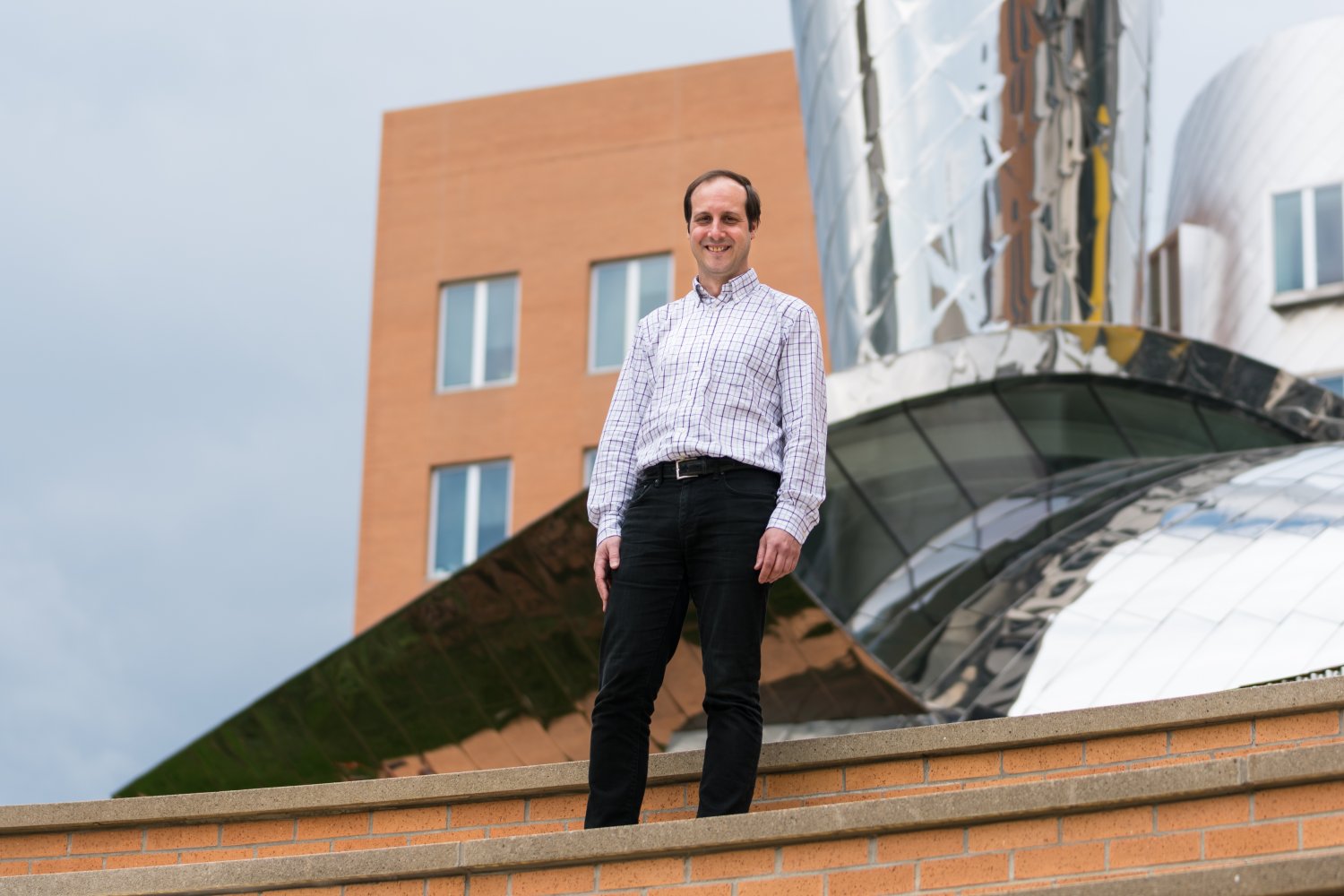
3 Questions: Using AI to accelerate the discovery and design of therapeutic drugs
Professor James Collins discusses how collaboration has been central to his research into combining computational predictions with new experimental platforms.
MIT News
AlphaGenome Deciphers Non-Coding DNA for Gene Regulation
When AlphaFold solved the protein-folding problem in 2020, it showed that artificial intelligence could crack one of biology’s deepest mysteries: how a string of amino acids folds itself into a working molecular machine.The team at Google DeepMind behind that Nobel Prize-winning platform then turned their lens from from the structure of proteins to how these molecules function in the body. Applying similar machine-learning methods, they first developed AlphaMissense, an AI tool for predicting which changes in protein structure are likely to cause disease. AlphaProteo, a system for designing proteins that bind to specific molecular targets, came next.Now the architects of the Alpha platform..
IEEE Spectrum > Artificial IntelligenceFrom guardrails to governance: A CEO’s guide for securing agentic systems
The previous article in this series, “Rules fail at the prompt, succeed at the boundary,” focused on the first AI-orchestrated espionage campaign and the failure of prompt-level control. This article is the prescription. The question every CEO is now getting from their board is some version of: What do we do about agent risk? Across…
MIT Technology Review
The Download: the future of nuclear power plants, and social media-fueled AI hype
This is today’s edition ofThe Download,our weekday newsletter that provides a daily dose of what’s going on in the world of technology. Why AI companies are betting on next-gen nuclear AI is driving unprecedented investment for massive data centers and an energy supply that can support its huge computational appetite. One potential source of electricity…
MIT Technology Review
![[2026-8호] ETRI, 한일공동 휴대폰 전자파와 발암연관성 없음 발표](https://www.etri.re.kr/userfiles/image/22018fbf-867d-4b4e-88c5-b7e3a97bcf57.jpg)
AI Hunts for the Next Big Thing in Physics
In 1930, a young physicist named Carl D. Anderson was tasked by his mentor with measuring the energies of cosmic rays—particles arriving at high speed from outer space. Anderson built an improved version of a cloud chamber, a device that visually records the trajectories of particles. In 1932, he saw evidence that confusingly combined the properties of protons and electrons. “A situation began to develop that had its awkward aspects,” he wrote many years after winning a Nobel Prize at the age of 31. Anderson had accidentally discovered antimatter.Four years after his first discovery, he codiscovered another elementary particle, the muon. This one prompted one physicist to ask, “Who o..
IEEE Spectrum > Artificial IntelligenceThe Download: squeezing more metal out of aging mines, and AI’s truth crisis
This is today’s edition ofThe Download,our weekday newsletter that provides a daily dose of what’s going on in the world of technology. Microbes could extract the metal needed for cleantech In a pine forest on Michigan’s Upper Peninsula, the only active nickel mine in the US is nearing the end of its life. At a…
MIT Technology Review
Microbes could extract the metal needed for cleantech
In a pine forest on Michigan’s Upper Peninsula, the only active nickel mine in the US is nearing the end of its life. At a time when carmakers want the metal for electric-vehicle batteries, nickel concentration at Eagle Mine is falling and could soon drop too low to warrant digging. But earlier this year, the…
MIT Technology Review
The release of the international AI safety report 2026: navigating rapid AI advancement and emerging risks
The International AI Safety Report 2026 has been released today on 3 February 2026, marking the second iteration of the most comprehensive global assessment of artificial intelligence capabilities, risks, and safety measures.
techUK
FCA opens second cohort applications for AI live testing
The FCA has opened applications for the second cohort for their AI Live Testing service which offers firms the opportunity to test AI systems in live market conditions with regulatory support. Applications are open until 2 March 2026.
techUK
Barnsley named UK’s first ‘Tech Town’
Barnsley has been named the UK’s first government-backed Tech Town, with plans to roll out AI across public services, skills, healthcare and local business as part of a place-based regeneration approach. Announced by the Department for Science, Innovation and Technology, the initiative aims to demonstrate how AI adoption can improve local services, build skills and support regional growth.
techUK
Does AI understand word impressions like humans do?
By now, it's no secret that large language models (LLMs) are experts at mimicking natural language. Trained on vast troves of data, these models have proven themselves capable of generating text so convincing that it regularly appears humanlike to readers. But is there any difference between how we think about a word and how an LLM does?
Phys.org > Computer Sciences