MIT engineers develop a magnetic transistor for more energy-efficient electronics
A new device concept opens the door to compact, high-performance transistors with built-in memory.
MIT News
Video Friday: AI Gives Robot Hands Human-Like Dexterity
Video Friday is your weekly selection of awesome robotics videos, collected by your friends at IEEE Spectrum robotics. We also post a weekly calendar of upcoming robotics events for the next few months. Please send us your events for inclusion.ICRA 2026: 1–5 June 2026, VIENNARSS 2026: 13–17 July 2026, SYDNEYSummer School on Multi-Robot Systems: 29 July–4 August 2026, PRAGUEActuate 2026: 18–19 August 2026, SAN FRANCISCOEnjoy today’s videos! Introducing GENE-26.5—the first AI brain to give robots human-level physical manipulation capabilities. Cooking a full meal. Cracking an egg one-handed. Conducting lab experiments. Wire harnessing. Even playing the piano. Tasks that were imposs..
IEEE Spectrum > RoboticsHere’s what you need to know about the cruise ship hantavirus outbreak
MIT Technology Review Explains: Let our writers untangle the complex, messy world of technology to help you understand what’s coming next.You can read more from the series here. Eight passengers aboard a Dutch-flagged cruise ship have contracted a type of hantavirus, a rare virus transmitted by rats. Three of them have died. As the ship…
MIT Technology Review
The Download: AI malaise and babymaking tech
This is today’s edition of The Download, our weekday newsletter that provides a daily dose of what’s going on in the world of technology. We’ve entered the era of AI malaise AI is spreading everywhere, and it is not going away. But what will it do? What effect will it have on our society? Will…
MIT Technology Review
Here’s how technology transformed babymaking
Technology is changing the way we make babies. The pioneering work of the scientists who invented IVF led to the birth of the first “test tube baby” in 1978. We’ve come a long, long way since then. This week, I’ve been working on a piece about the cutting edge of IVF technologies and what’s coming…
MIT Technology Review
Musk v. Altman week 2: OpenAI fires back, and Shivon Zilis reveals that Musk tried to poach Sam Altman
In the second week of the landmark trial between Elon Musk and OpenAI, Musk’s motivations for bringing the suit were under scrutiny. Last week, Musk took the stand, alleging that OpenAI CEO Sam Altman and president Greg Brockman had deceived him into donating $38 million to the company. He claimed that they’d promised to maintain…
MIT Technology Review
Majority voting method provides a smarter way to catch software bugs
Researchers from The University of Osaka, Kyushu University, and the University of Victoria have developed a new method called Majority Voting SZZ (MV-SZZ) that accurately identifies defect-inducing software commits. By combining detailed code tracking with a majority voting system, the approach reduces false positives and outperforms existing techniques. This improvement could help developers debug software more efficiently and build more reliable systems. The work is published in the journal IEEE Transactions on Software Engineering.
Phys.org > Computer Sciences
A human-inspired pipeline could enhance the training of computer vision models
Over the past few decades, computer scientists have developed increasingly advanced artificial intelligence (AI) systems that can tackle some tasks exceedingly well. These include computer vision models, systems that can rapidly analyze images and categorize them, recognize objects and faces, or make other accurate predictions.
Phys.org > Computer Sciences
효과적인 국제 연구 협력을 위해서는 ‘우수한 파트너 찾기’보다 ‘우수한 파트너 되기’가 중요
효과적인 국제 연구 협력을 위해서는 ‘우수한 파트너 찾기’보다 ‘우수한 파트너 되기’가 중요 - 국제 공동연구, 협력만으로 시너지 보장되지 않아 - 국가 간 역량 차이와 역할에 따른 협력 전략 필요 □ 한국과학기술정보연구원(원장 이식, 이하 KISTI)은 국제 연구 협업의 성과를 심층 분석한 「데이터로 바라본 국제 연구 협력에서 나타난 시너지 효과의 조건」 보고서를 발간했다고 밝혔다. 국제 연구 협업은 연구 역량 강화와 네트워크 확대를 위한 핵심 수단으로 활용되어 왔다. ○ 이번 보고서는 국제 협력 연..
한국과학기술정보연구원(KISTI) 소식
AI Is Starting to Build Better AI
The field of artificial intelligence was built on the premise that machines might someday improve themselves. In 1966, the English mathematician I. J. Good wrote that “an ultraintelligent machine could design even better machines; there would then unquestionably be an ‘intelligence explosion,’ and the intelligence of man would be left far behind.” AI researchers have long seen recursive self-improvement, or RSI, as something to both desire and fear. Today, advances in AI are raising the question of whether parts of that process are already underway.RSI means many things to many people. Some use the idea as a bogeyman to scare up regulation, while others brandish it in marketing. For ..
IEEE Spectrum > Artificial IntelligenceThe Download: the tech reshaping IVF and the rise of balcony solar
This is today’s edition of The Download, our weekday newsletter that provides a daily dose of what’s going on in the world of technology. What’s next for IVF IVF has brought millions of babies into the world over the last four decades. But the process can still be slow, painful, and expensive—and far from guaranteed…
MIT Technology Review
The balcony solar boom is coming to the US
Dozens of US states are considering legislation to allow people to install plug-in solar systems, often called balcony solar. These small arrays require little to no setup and could help cut emissions and power bills. Balcony solar is already popular in Europe, and proponents say that the systems could make solar power more accessible for…
MIT Technology Review
What’s next for IVF
MIT Technology Review’s What’s Next series looks across industries, trends, and technologies to give you a first look at the future. You can read the rest of themhere. Forty-eight years ago this July, Louise Joy Brown became the world’s first person born with the help of in vitro fertilization. Millions more IVF babies have entered…
MIT Technology Review


![[2026-30호] ETRI, 공공정책도 AI로...정책지능 국제표준 확정](https://www.etri.re.kr/userfiles/image/d6912e94-dbc9-4191-8900-2b0f391aba1a.jpg)

Learn What It Takes to Become a Cybersecurity Consultant
Cybersecurity consultants have never been more in demand. Information security analyst roles are projected to grow nearly 30 percent between now and 2034, according to the U.S. Bureau of Labor Statistics. More than 15 million cybercrime incidents occurred worldwide in 2024, Statista reported.Data breaches are costly and pose direct safety risks. Statista reported that more than US $10 trillion is spent annually repairing the damage caused by cybercrime, most commonly phishing, spoofing, extortion, and data breaches. In one example in the United States, breathalyzer devices installed in vehicles became disabled, leaving hundreds of drivers stranded, as detailed in an IEEE Spectrum article.To ..
IEEE Spectrum > ComputingTen Technology Enablers Shaping the Future of 6G Wireless
A guide to ten technological components — from THz communications and AI/ML to reconfigurable intelligent surfaces — poised to define 6G wireless networks.What Attendees will LearnWhich frequencies 6G will use — Understand why THz bands (above 100 GHz) and the7–24 GHz range are under consideration, what challenges CMOS technology faces at sub-THz frequencies, and how new semiconductor approaches aim to close the output-power gap for future link budgets.How AI/ML and joint communications and sensing reshape the air interface — how auto encoder-based end-to-end learning can replace traditional signal-processing blocks, and how a single waveform may serve both data transmission and ra..
IEEE Spectrum > Artificial IntelligenceChatbots Need Guardrails to Prevent Delusions and Psychosis
Millions of people worldwide are turning to chatbots like ChatGPT or Claude, and a proliferating class of specialized AI companionship apps for friendship, therapy, or even romance.While some users report psychological benefits from these simulated relationships, research has also shown the relationships can reinforce or amplify delusions, particularly among users already vulnerable to psychosis. AIs have been linked to multiple suicides, including the death of a Florida teenager who had a months-long relationship with a chatbot made by a company called Character.AI. Mental-health experts and computer scientists have warned that chatbot mental health counselors violate accepted mental health..
IEEE Spectrum > Artificial IntelligenceThe Download: seafloor science and military chatbots
This is today’s edition of The Download, our weekday newsletter that provides a daily dose of what’s going on in the world of technology. Inexpensive seafloor-hopping submersibles could stoke deep-sea science—and mining Last week, two oblong neon submersibles started to descend nearly 6,000 meters into the Pacific Ocean. Throughout the rest of May, they will…
MIT Technology Review
Stress-testing method for cloud computing algorithms helps avoid network failures
Researchers from MIT and elsewhere have developed a more user-friendly and efficient method to help networking engineers identify potential system failures before they cause major problems, like a cloud service outage that leaves millions of users unable to access applications.
Phys.org > Computer Sciences
Games people — and machines — play: Untangling strategic reasoning to advance AI
Assistant Professor Gabriele Farina mines the foundations of decision-making in complex multi-agent scenarios.
MIT News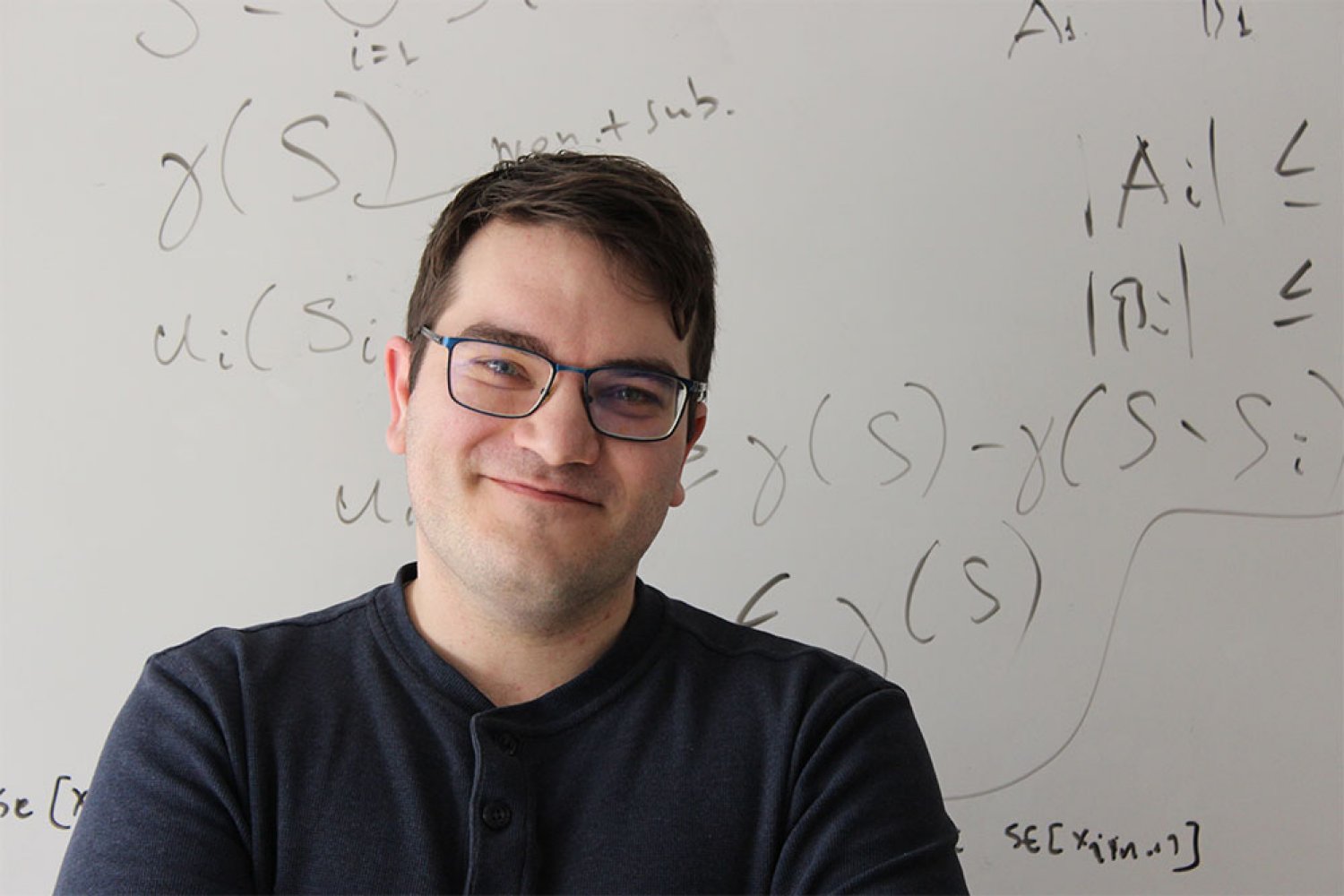
Do We Really Need Smarter AI to Cure Cancer?
By some estimates, more than a trillion dollars have already been invested in artificial intelligence. But large tech companies, including Meta and OpenAI, are still not content with today’s AI; they say they’ve set their sights on powerful, versatile AI that by some measure would match or even exceed human performance. A remarkable amount of resources is being poured into developing artificial general intelligence (AGI) or even more capable artificial super intelligence (ASI).Excitement around the potential of such a technology is often accompanied by casual claims of some remarkable capabilities. One in particular—curing cancer—stands out to Emilia Javorsky, director of the Futures..
IEEE Spectrum > Artificial IntelligenceThe Download: inside the Musk v. Altman trial, and AI for democracy
This is today’s edition of The Download, our weekday newsletter that provides a daily dose of what’s going on in the world of technology. Week one of the Musk v. Altman trial: what it was like in the room Two of the most powerful figures in AI—Sam Altman and Elon Musk—are in the middle of…
MIT Technology Review
A blueprint for using AI to strengthen democracy
Every few centuries, changes in how information moves reshape how societies govern themselves. The printing press spread vernacular literacy, helping give rise to the Reformation and, eventually, representative government. The telegraph made it possible to administer vast nations like the US, accelerating the growth of the modern bureaucratic state. Broadcast media created shared national audiences,…
MIT Technology Review

A simple physics-inspired model sheds light on how AI learns
Artificial intelligence systems based on neural networks—such as ChatGPT, Claude, DeepSeek or Gemini—are extraordinarily powerful, yet their internal workings remain largely a "black box." To better understand how these systems produce their responses, a group of physicists at Harvard University has developed a simplified mathematical model of learning in neural networks that can be analyzed mathematically using the tools of statistical physics.
Phys.org > Computer Sciences